From Darkroom to AI: The Manipulation We've Always Embraced
The debate around AI photography often centers on authenticity, as if artificial intelligence suddenly introduced manipulation into what was once a "pure" medium. But this narrative misses a fundamental truth about photography that's been with us since the very first daguerreotype: the camera has never captured reality as we see it. More importantly, it ignores the obvious trajectory we've been on for nearly two centuries—a steady march toward increasingly sophisticated image manipulation that makes today's AI tools not revolutionary, but inevitable.
What's truly surprising isn't that AI photography exists, but that anyone is surprised by it at all.
The Myth of Photographic Truth
When Louis Daguerre unveiled his revolutionary process in 1839, observers marveled at photography's ability to capture "exactly what the eye sees." Yet anyone who's compared a photograph to their memory of a scene knows this was never quite accurate. The camera's mechanical eye sees the world through a fixed focal length, compresses three-dimensional space onto a flat plane, and freezes a single moment from the continuous flow of time.
Early photographers quickly discovered that their medium was as much about interpretation as documentation. The choice of lens, the angle of view, the moment of exposure—these were already editorial decisions that shaped reality rather than simply recording it. A wide-angle lens could make a modest mountain appear imposing, while a telephoto could compress distant peaks into a dramatic wall of stone.
The Darkroom: Photography's First "AI"
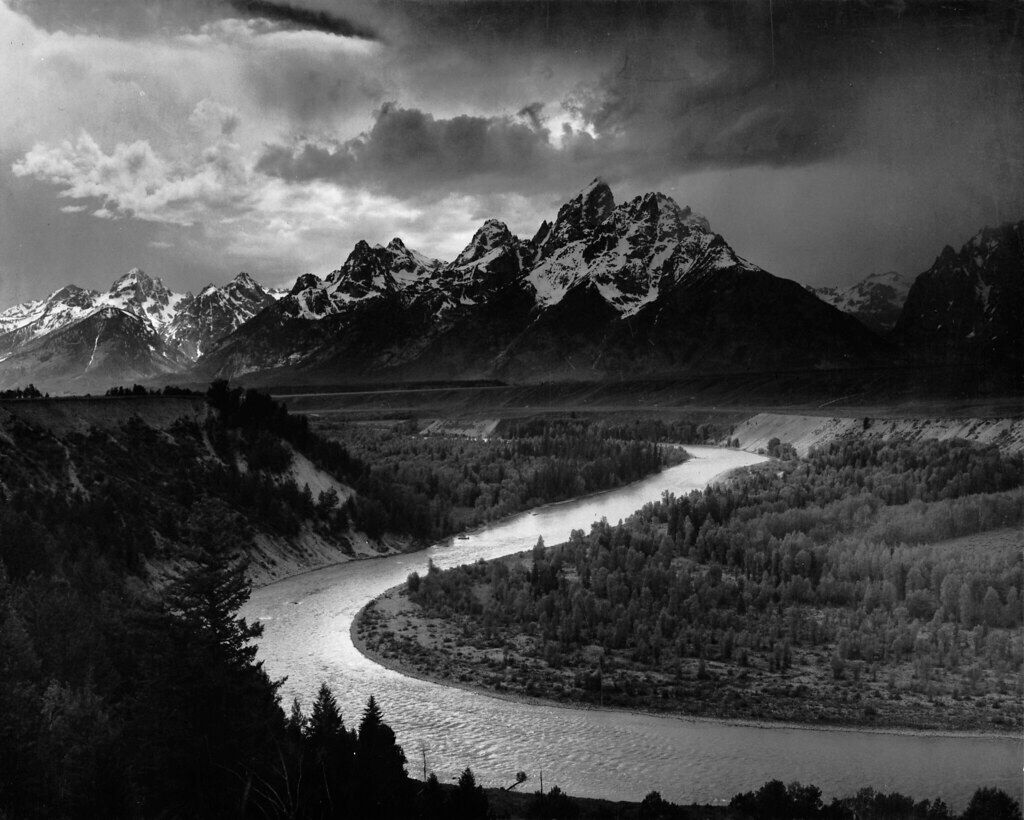
Ansel Adams - The Tetons and the Snake River Grand Teton National Park, 1941
The real manipulation began in the darkroom, where photographers wielded chemicals and light like digital artists would later use pixels and algorithms. Ansel Adams, whose landscape photographs remain the gold standard for natural beauty, was famously meticulous about his darkroom work. He would dodge and burn, adjust contrast, and manipulate exposure times to create images that matched his artistic vision rather than what the camera initially captured.
Adams himself said, "The negative is the equivalent of the composer's score, and the print the performance." This wasn't cheating—it was artistry. The darkroom became a place where photographers could coax out the drama hidden in shadows, emphasize the play of light across rock faces, or bring out cloud formations that were barely visible in the original negative.
Techniques like double exposure, combination printing, and hand-coloring were common practices. Victorian photographers routinely combined multiple negatives to create more dynamic skies or to place subjects in impossible scenarios. Portrait photographers became skilled at retouching negatives with pencils and brushes, smoothing skin imperfections and removing blemishes directly on the glass plate or film negative—a painstaking process that required considerable artistic skill.
The famous Cottingley Fairies photographs that fooled Arthur Conan Doyle were created using simple darkroom techniques available to any amateur photographer of the era.
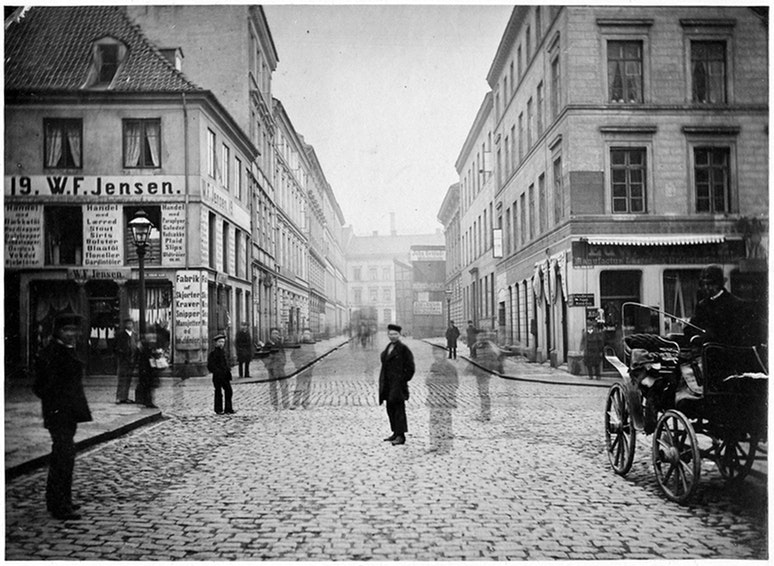
Nedre Slottsgate in Oslo, Norway, in 1882
Beyond the Darkroom: Physical Filters and Multiple Exposures
Even before digital technology arrived, photographers had developed numerous techniques to shape their images at the moment of capture. Physical camera filters became essential tools for landscape photographers, allowing them to manipulate light and contrast in ways that went far beyond what the naked eye could see.
Polarizing filters could eliminate reflections from water surfaces and darken skies dramatically. Neutral density filters enabled long exposures that transformed rushing waterfalls into silky veils and turned choppy lakes into mirror-smooth surfaces. Graduated neutral density filters allowed photographers to balance the exposure between bright skies and darker foregrounds—essentially performing HDR photography decades before digital sensors existed.
Color filters took this manipulation even further. A red filter on black and white film could turn a mundane sky into a dramatic backdrop of dark clouds against white peaks. Yellow filters enhanced contrast in foliage, while blue filters could create ethereal, otherworldly effects in snow and ice photography.
Multiple exposures offered another avenue for creative interpretation. Photographers would expose the same frame of film multiple times, creating layered images that captured different aspects of a scene or compressed time into a single frame. This technique allowed for effects like star trails, motion blur, or the combination of different lighting conditions in one image.
Some photographers became masters of in-camera double exposures, carefully planning shots to overlay complementary elements. Others used techniques like sandwich printing, where two separate negatives were printed together to create composite images that would be impossible to achieve in a single exposure.
The Digital Revolution: Pixels Replace Silver
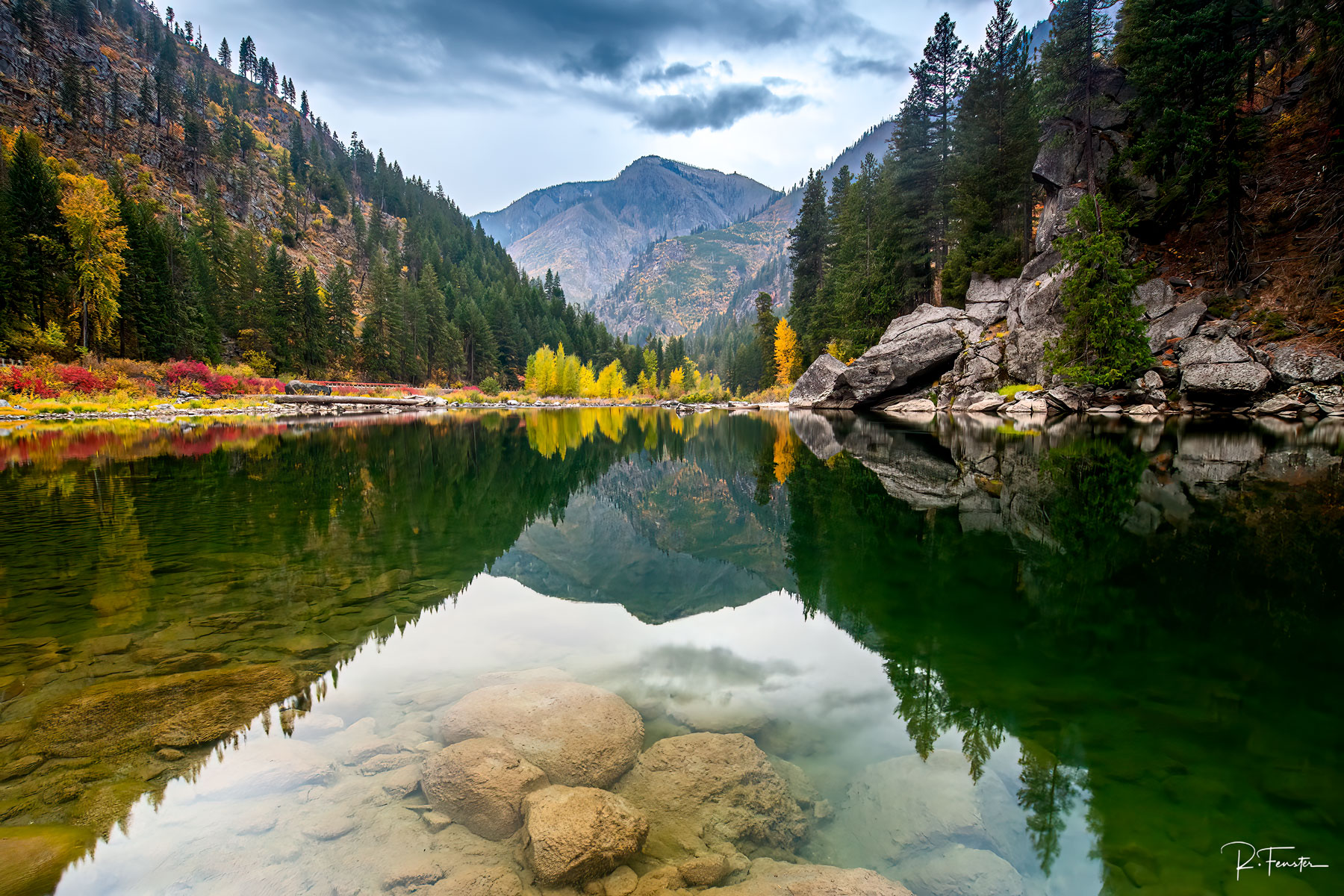
A fall afternoon reveals a perfectly symmetrical scene and the rocks below
Fine Art Limited Edition of 100
The transition from film to digital sensors in the 1990s and 2000s didn't fundamentally change photography's interpretive nature—it simply moved the darkroom into the computer and made many film-era techniques more accessible. Adobe Photoshop, released in 1990, democratized image manipulation in ways that would have required expensive equipment and years of training in the analog era.
Suddenly, landscape photographers could blend multiple exposures seamlessly, remove unwanted elements from compositions, or enhance colors to match the emotional impact of being present in the moment. Portrait photographers gained access to sophisticated retouching tools that made the painstaking negative retouching of the film era seem primitive by comparison—skin smoothing, blemish removal, and even major facial restructuring became possible with a few clicks.
The tools were different, but the underlying philosophy remained the same: the camera captures raw material, and the photographer's job is to craft it into something that communicates their vision.
Digital photography also introduced new possibilities for capturing scenes that were previously impossible. High Dynamic Range (HDR) photography allowed photographers to capture the full range of light in a scene, from deep shadows to bright highlights. Focus stacking enabled sharp images from foreground to background that no single exposure could achieve. These weren't departures from "natural" photography—they were attempts to more closely approximate what the human eye actually sees.
The Inevitable March of Technology
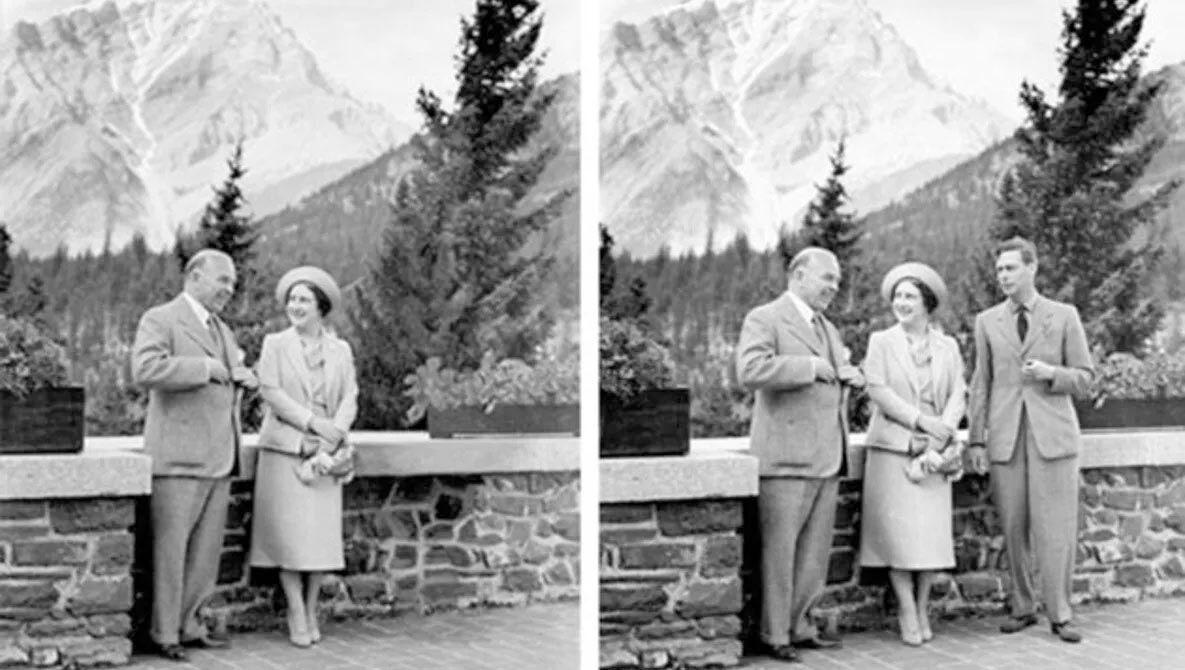
On the left image, King George VI was removed from the original photograph, where he previously appeared together with Queen Elizabeth and Canadian Prime Minister William Lyon Mackenzie (1939).
The integration of artificial intelligence into photography didn't happen overnight—it's been building for generations. Yet somehow, we act shocked when the logical endpoint of 180 years of technological advancement finally arrives. Each generation of photographers has pushed the boundaries of what's possible, demanding tools that could better translate their vision into reality. The industry has consistently delivered, creating increasingly sophisticated methods for manipulating images.
Why, then, are we surprised that this progression led to AI? Why do we act as if machine learning algorithms crossing the threshold into creative assistance represents some fundamental betrayal of photography's "pure" origins, when those origins never existed in the first place?
The Quiet Revolution We Chose to Ignore
The integration of AI into photography began subtly, with features that photographers barely noticed but readily embraced. Auto-focus systems became more sophisticated, using pattern recognition to track subjects. Exposure metering improved through machine learning algorithms that could interpret complex lighting scenarios.
Camera manufacturers began incorporating AI-powered features directly into their hardware. Modern cameras can recognize faces, track eyes, and adjust settings automatically based on scene analysis. Computational photography in smartphones uses AI to combine multiple exposures, reduce noise, and enhance details in ways that were impossible with traditional optical systems.
Photo editing software evolved alongside these hardware advances. Adobe introduced AI-powered features like Content-Aware Fill, which could intelligently remove objects from images by analyzing surrounding pixels. Sky replacement tools became sophisticated enough to match lighting and perspective automatically. Noise reduction algorithms learned to distinguish between unwanted grain and intentional texture.
Each of these developments was met with enthusiasm by photographers eager to streamline their workflows and achieve better results. We welcomed the technology when it served our immediate needs, then acted surprised when it continued evolving beyond our comfort zone.
The Backlash Against Our Own Creation
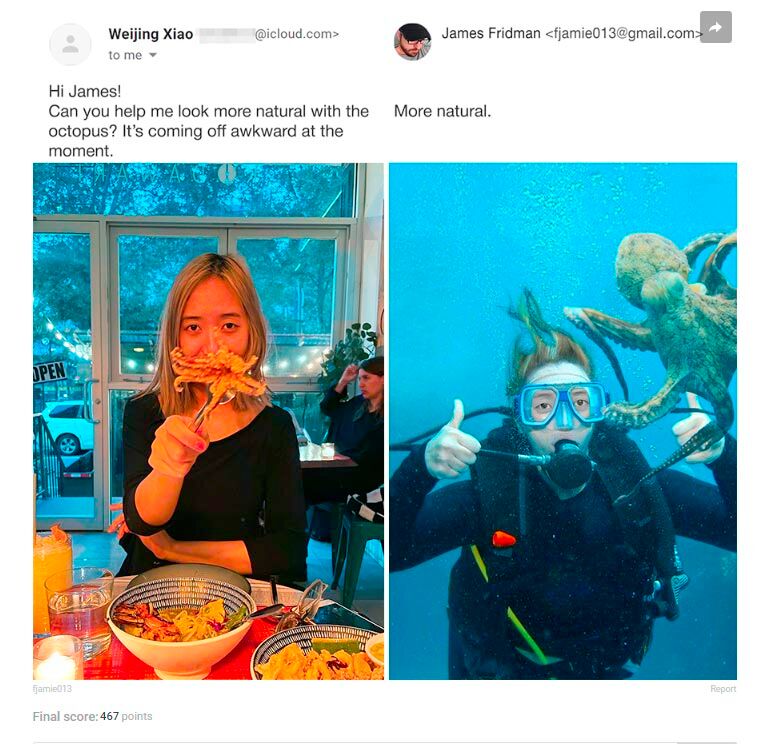
Today's AI photography tools represent the latest evolution in a long tradition of technological assistance. Programs like Luminar AI, Topaz Labs' suite of AI-powered plugins, and Adobe's Sensei technology don't replace the photographer's eye—they enhance it. These tools can suggest compositions, automatically mask complex subjects, or apply sophisticated adjustments that would take hours to achieve manually.
Yet many photographers now express disappointment or concern about these developments, as if we didn't collectively demand them. For decades, we've pushed software companies to make editing faster, more intuitive, and more powerful. We've celebrated each advancement that reduced the technical barriers between our vision and the final image. Now that the technology has reached a level of sophistication that feels almost magical, we're somehow upset that it worked too well.
This reaction reveals a fundamental disconnect between our stated desires and our actual comfort with their fulfillment. We wanted tools that could understand our artistic intent and help us realize it more efficiently. We got exactly that—and then decided it was too much.
For landscape photographers, AI has become particularly valuable in post-processing workflows. AI-powered tools can intelligently enhance details in rock formations, separate skies from foregrounds for selective editing, or even suggest optimal crop ratios based on composition principles. In portrait photography, AI retouching tools have become incredibly sophisticated, automatically detecting and smoothing skin, whitening teeth, and even adjusting facial features while maintaining natural-looking results. The technology handles the technical heavy lifting, freeing photographers to focus on the creative aspects of their work.
The Consistency We Refuse to See

Fine Art Limited Edition of 100
What's remarkable about this evolution is how consistent the underlying philosophy has remained—and how blind we've been to the obvious trajectory. Photography has always been about interpretation, selection, and enhancement. The tools have grown more sophisticated, but the fundamental challenge remains the same: how to translate the three-dimensional, dynamic experience of being in a landscape into a two-dimensional, static image that captures not just what you saw, but what you felt.
AI photography and AI art continue this tradition. When an AI algorithm enhances the drama of a sunset or brings out details in shadow areas, it's performing the same function that Adams achieved with his darkroom techniques or that Photoshop enabled with its digital tools. The technology is more advanced, but the creative intent remains human.
The predictable path we've followed for generations has simply reached its logical next step. That we're surprised by this says more about our collective inability to recognize patterns than it does about any fundamental change in photography's nature.
Embracing the Inevitable

Fine Art Limited Edition of 100
The future of AI in photography will likely bring even more sophisticated tools for creative expression. We're already seeing AI that can generate realistic textures, intelligently extend image boundaries, or even suggest alternative compositions based on successful photographs. As AI art continues to evolve alongside AI photography, these advances will continue to blur the line between capture and creation, just as every previous technological leap has done.
The question isn't whether these developments will continue—they will. The question is whether we'll continue to act surprised by a progression that's been underway for nearly two centuries, or whether we'll finally acknowledge that we've been building toward this moment all along.
Moving forward, now more than ever, photographers will need to define a clear set of principles by which they wish to operate. The increasing sophistication of AI tools means that the boundaries between enhancement and fabrication will continue to blur, making personal artistic ethics more important than industry standards or technical limitations. Each photographer must decide where they draw the line: What level of AI assistance aligns with their vision? How much automation supports their creative process versus replacing it? What constitutes authentic representation of their experience?
These aren't technical questions—they're philosophical ones that will define not just individual practices, but the future identity of photography itself.
For landscape photographers, this evolution presents opportunities rather than threats. AI tools can help us realize visions that were previously impossible or impractical. They can assist in the technical aspects of photography, allowing us to spend more time in the field and less time at the computer. Most importantly, they can help us create images that more accurately convey the emotional impact of standing before a dramatic landscape.
But perhaps most importantly, they represent the fulfillment of photography's long-held promise: tools that can help us share our vision of the world with others, unencumbered by technical limitations—provided we maintain clarity about what that vision represents.
The camera has never captured reality as we see it. Instead, it has always been a tool for interpretation, a means of translating our experience of the world into something that can be shared with others. AI photography is simply the latest chapter in this ongoing story of technological evolution in service of human creativity.
As we move forward, the most important question isn't whether AI-assisted photography is "real" or "authentic"—it's whether it helps us create images that move people, inspire conservation, and share the profound beauty of the natural world. In that sense, AI photography is just another tool in the photographer's kit, one that extends our creative reach while honoring the long tradition of photographic interpretation that began with the first camera obscura.
The Foundation of Traditional Photography
While AI continues to expand the possibilities of photographic expression, it's worth remembering that the most powerful images still begin with the fundamentals of traditional photography. The photographs that form the backbone of my landscape art collection aren't computer-generated abstractions—they're captures of real places, taken during expeditions to remote locations often reached at considerable expense and physical discomfort.
There's something irreplaceable about being present in a landscape at the perfect moment: waiting hours for the right light to hit a mountain face, hiking through difficult terrain to reach a hidden waterfall, or enduring bitter cold to capture the aurora dancing across an arctic sky. These moments can't be fabricated in software—they must be witnessed and captured.
Yes, I use digital editing tools to enhance these images, but the enhancement process is fundamentally different from creation. If the dramatic light wasn't there during capture, no amount of post-processing will convincingly add it. If the composition lacks a compelling subject, no filter can provide one. If the moment wasn't captured with proper technique, no software can rescue it.
The editing process serves to reveal what was already present in the scene—bringing out the drama that your eye saw but the camera struggled to record, balancing exposures to match what you experienced, or enhancing colors to convey the emotional impact of standing in that particular place at that specific moment.
This distinction matters because it speaks to the heart of what makes landscape photography compelling: the knowledge that someone ventured into the wilderness, endured the elements, and was there to witness something extraordinary. The technical tools we use to share that experience may evolve, but the fundamental human journey—the exploration, the patience, the moment of discovery—remains unchanged.
If you'd like to see some photography that isnt made in a blender, have a look through my image galleries of real photographs of real locations.
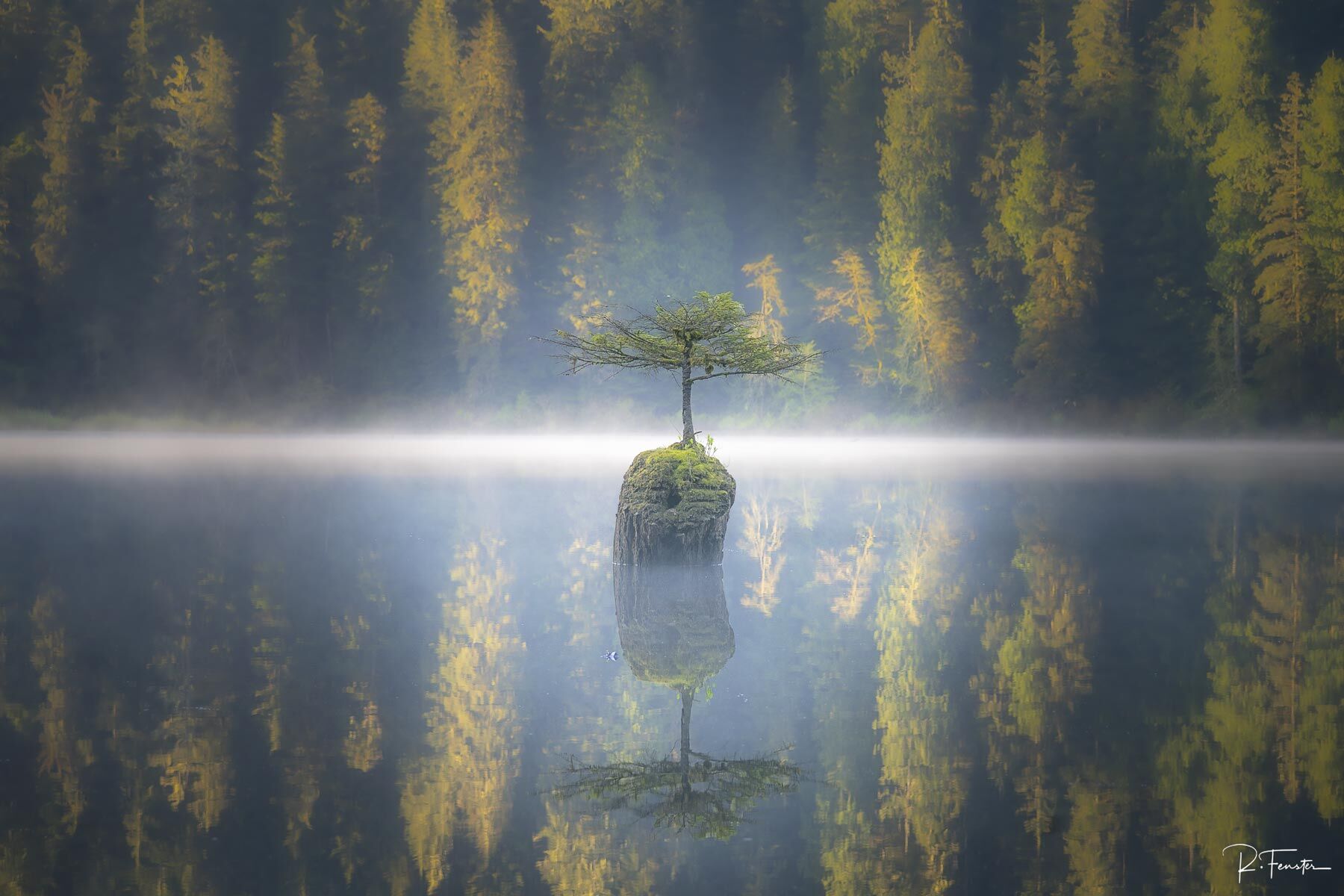
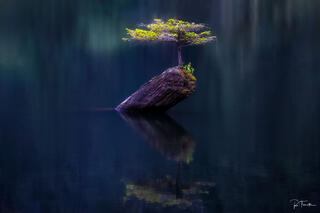
As the morning light passes over Fairy Lake, the small bonsai tree and the surrounding foliage reflect in the calm waters.