Think you need a 50MP camera to shoot landscapes? Think again!
Best Camera for Landscape Photography: Why Expensive Gear Won't Make You a Better Photographer
A professional landscape photographer's honest guide to choosing camera equipment that actually matters
The $4,000 Question Every Landscape Photographer Asks
"What camera do I need for professional landscape photography?" It's the question that floods my inbox weekly. Photography forums overflow with debates about sensor sizes, megapixel counts, and dynamic range specs. Camera manufacturers spend millions convincing you that their latest $4,000+ body is essential for serious landscape work.
Here's the truth no gear reviewer wants to admit: some of my best-selling fine art prints, were captured with cameras costing under $1,000.
Why Camera Specs Don't Tell the Whole Story
The Full-Frame Myth Debunked
Walk into any camera store, and you'll hear the same advice: "For landscape photography, you need full-frame." Sales associates will point you toward cameras like:
- Sony A7R V ($3,898)
- Canon EOS R5 ($3,899)
- Nikon Z7 II ($2,996)
These are exceptional cameras, but they're not essential for creating professional-quality landscape images.
Real-world example: My image "Resilience" - one of my best-sellers - was captured with an Olympus OM-D E-M5, a 16MP Micro Four Thirds camera that originally cost $999. I've printed this image at 40"×60" with stunning results that hang in collectors' homes.
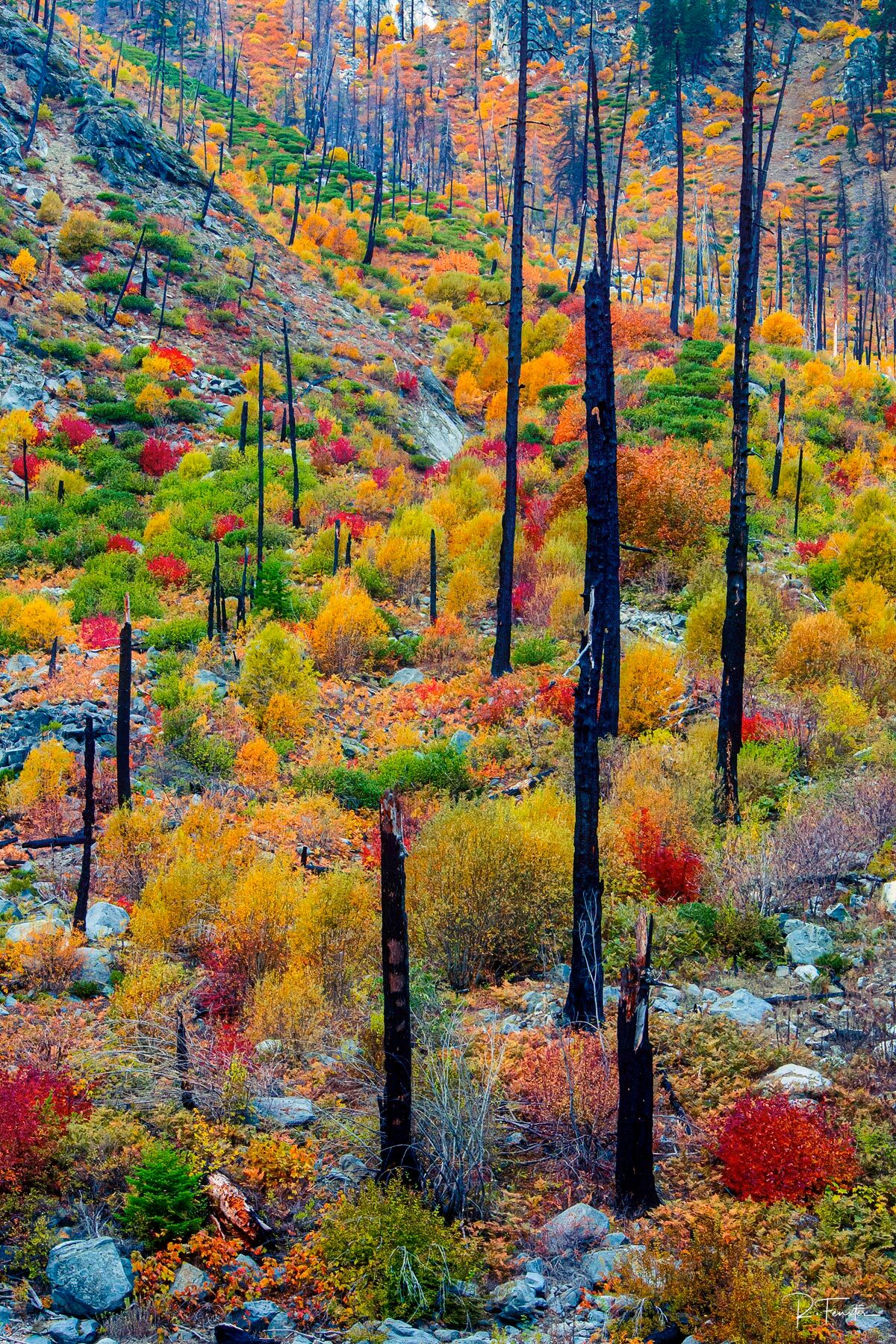
The remains of of burnt trees stand tall amongst the avalanche of colorful trees behind
Fine Art Limited Edition of 100
The Megapixel Trap: Why 24MP Beats 61MP for Most Photographers
Camera marketing loves to emphasize megapixel count. The assumption: more megapixels = better prints. This simply isn't true for most landscape applications.
Professional reality check:
- Most of my large format prints (up to 40"×60") come from 20-24MP cameras
- Popular professional cameras like the Canon EOS R6 Mark II (24MP) and Nikon Z6 II (24MP) produce gallery-quality prints
- My Sony A7 III (24MP) consistently delivers museum-quality results
The difference between 24MP and 61MP becomes negligible unless you're:
- Cropping heavily (more than 50% of the frame)
- Printing larger than 60 inches on the longest side
- Creating commercial work for billboard advertising
Camera Categories That Actually Work for Landscape Photography
Full-Frame Cameras: The Professional Standard
Best full-frame options for landscape photography:
Sony A7 III ($1,998)
- 24MP sensor with excellent dynamic range
- 5-axis image stabilization
- Weather sealing for outdoor conditions
- What I currently use for most landscape work
Canon EOS R6 Mark II ($2,499)
- 24MP sensor optimized for low light
- Exceptional color science for natural tones
- Robust weather sealing
Nikon Z6 II ($1,996)
- 24MP with outstanding dynamic range
- Dual card slots for backup security
- Excellent battery life for long shooting sessions
APS-C Cameras: The Sweet Spot for Most Photographers
APS-C sensors offer 85% of full-frame performance at 60% of the cost and weight.
Top APS-C choices:
Fujifilm X-T5 ($1,699)
- 40MP APS-C sensor (higher resolution than most full-frame!)
- Film simulation modes for creative color grading
- Compact, weather-sealed body
Sony A7000 Series ($898-1,398)
- Professional autofocus system
- Excellent dynamic range
- Extensive lens ecosystem
Canon EOS R7 ($1,499)
- 32MP sensor with impressive detail
- Dual pixel autofocus
- Weather-sealed construction
Micro Four Thirds: Maximum Portability, Professional Results
Don't dismiss smaller sensors. The Micro Four Thirds system produces exceptional landscape images with significant advantages:
OM System OM-1 ($2,199)
- 20MP sensor with incredible image stabilization
- Weatherproof design (can handle rain/snow)
- Computational photography features
Olympus OM-D E-M5 Mark III ($1,199)
- Compact body perfect for hiking
- 5-axis stabilization
- High-resolution mode for detailed prints
Why I loved my OM-D E-M5:
- Weighed 60% less than comparable full-frame systems
- Never hesitated to bring it on challenging hikes
- Produced images like "Colors of Cushman Lake" that print beautifully at large sizes

The sun highlights the beautiful fall colors by this Colorado lake.
Fine Art Limited Edition of 100
What Actually Determines Image Quality in Landscape Photography
1. Tripod Stability (More Important Than Camera Choice)
Sharp images require:
- Sturdy tripod (invest more here than in camera upgrades)
- Mirror lock-up or electronic first curtain
- Timer or remote release to eliminate camera shake
Budget allocation tip: A $500 camera on a $300 tripod will outperform a $3,000 camera handheld.
2. Shooting in RAW Format
RAW files preserve maximum image data, allowing:
- Highlight and shadow recovery
- White balance correction
- Color grading flexibility
- Noise reduction control
Every camera mentioned in this guide shoots RAW. File format matters more than sensor size for final image quality.
3. Understanding Light Quality
Golden hour and blue hour photography:
- Plan shoots around sunrise/sunset times
- Use apps like PhotoPills for precise timing
- Understand how light direction affects mood
Weather considerations:
- Overcast skies create natural diffusion
- Storm light produces dramatic contrast
- Fog and mist add atmospheric depth
Images like "Where The Water Goes" succeed because of lighting timing, not camera specifications.
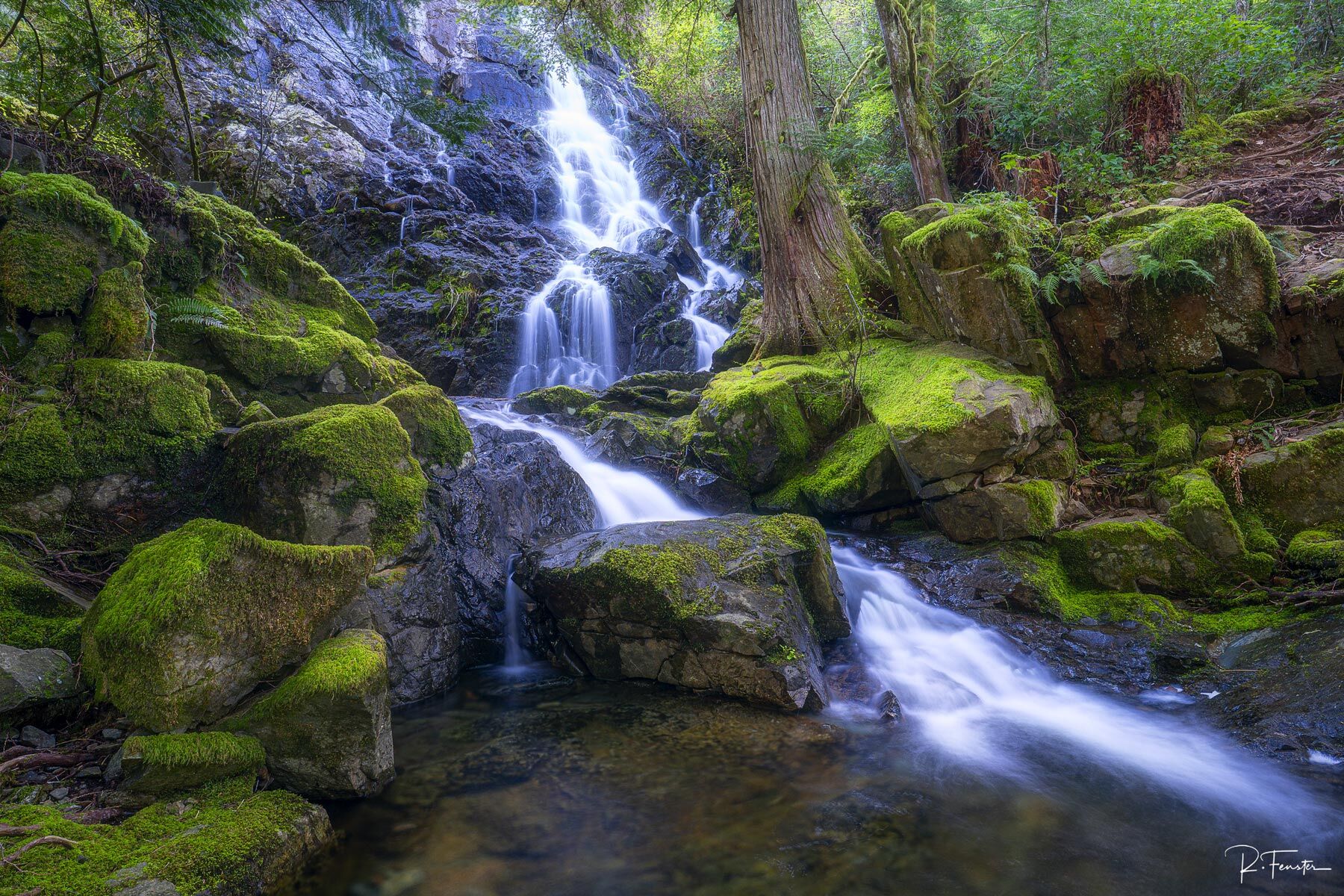
One of Vancouver Island's many waterfalls, Mary Vine Falls passes through endless mossy rocks as it finds its way down stream.
Fine Art Limited Edition of 100
4. Composition Over Megapixels
Essential composition techniques:
- Rule of thirds and leading lines
- Foreground, middle ground, background layering
- Natural framing elements
- Scale and perspective
No amount of resolution can fix poor composition. A well-composed 16MP image will always outperform a poorly composed 61MP shot.
Real-World Camera Recommendations by Budget
Under $1,000: Getting Started Right
Fujifilm X-S20 ($899)
- 26MP APS-C sensor
- In-body stabilization
- Weather resistance
- Excellent kit lens included
$1,000-$2,000: Serious Amateur to Semi-Pro
Sony A7 III ($1,998)
- Full-frame sensor
- Professional build quality
- Extensive lens options
- What I use for most commercial work
$2,000+: Professional/Commercial Use
Sony A7R V ($3,898)
- 61MP for maximum detail
- Advanced autofocus
- High-resolution needs only
The Portability Factor: Why Smaller Can Be Better
Weight Comparison Reality Check:
- Full-frame kit: 4-6 lbs (body + lenses)
- APS-C kit: 2.5-4 lbs
- Micro Four Thirds kit: 1.5-3 lbs
When portability matters most:
- Multi-day hiking trips
- Travel photography
- Climbing/scrambling to viewpoints
- Long photography sessions
Personal experience: Switching from full-frame to Micro Four Thirds increased my hiking range by 30% and reduced fatigue significantly. More energy for photography means better creative decisions.
Lens Investment: Where Your Money Actually Matters
Regardless of camera choice, invest in quality lenses:
Essential landscape focal lengths:
- 14-24mm: Wide-angle for expansive scenes
- 24-70mm: Versatile for varied compositions
- 70-200mm: Telephoto compression effects
Budget tip: Buy a mid-range camera body with professional lenses rather than a flagship body with kit lenses.
Print Size Reality: What Resolution Do You Actually Need?
Professional Print Standards:
- 16"×20" prints: 12MP minimum
- 24"×36" prints: 16MP minimum
- 40"×60" prints: 20MP minimum
- 60"+ prints: 30MP+ recommended
Most photographers never print larger than 24"×36". If this describes you, any modern camera (even entry-level) provides sufficient resolution.
Sure, if your camera has more megapixels, it will produce a more detailed image as more pixels produce more details, but unless you're printing in very large sizes, you arent going to notice.
Weather Sealing: When It Actually Matters
Essential for:
- Coastal photography (salt spray)
- Mountain conditions (sudden weather changes)
- Waterfall photography (mist and spray)
- Winter landscapes (snow and cold)
Featured cameras with excellent weather sealing:
- OM System OM-1 (freeze-proof to 14°F)
- Sony A7 III (dust and moisture resistant)
- Fujifilm X-T5 (operates to 14°F)

Fine Art Limited Edition of 100
The Honest Buying Guide: Matching Camera to Photographer
Choose Full-Frame If:
- You regularly print larger than 30 inches
- You shoot professionally/commercially
- Low light performance is critical
- Budget allows $2,500+ for body + lenses
Choose APS-C If:
- You want near-professional quality at lower cost
- Portability matters for your shooting style
- You're upgrading from smartphone photography
- Budget is $1,000-2,500 for complete kit
Choose Micro Four Thirds If:
- Hiking/travel photography is your focus
- You prioritize compact, lightweight gear
- Weather sealing is essential
- You shoot more for personal enjoyment than commercial use
My Personal Camera Evolution: Lessons Learned
2015-2018: Olympus OM-D E-M5
- Compact system enabled more adventurous photography
- Produced images still selling as fine art prints today
- Taught me that technique matters more than specs
2018-Present: Sony A7 III
- Upgraded for slightly better dynamic range
- Full-frame lenses offer more creative options
- Added weight occasionally limits hiking distance
Key insight: The upgrade improved my images by maybe 10%, but mastering composition and light improved them by 200%.
Conclusion: Your Next Camera Decision
The best camera for landscape photography is the one that:
- Fits your budget without forcing compromise on other essential gear
- Matches your physical needs (weight, size, weather requirements)
- Supports your printing goals (resolution requirements)
- Encourages frequent use (don't let intimidation keep it at home)
My honest recommendation: Start with a camera in the $1,000-2,000 range, invest heavily in a quality tripod and one excellent lens, then focus on developing your eye and technique.
The difference between amateur and professional landscape photography isn't camera specs - it's understanding light, composition, and timing.
Want to see what's possible with modest gear? Browse my complete gallery, where many images were captured with cameras costing under $1,500. When you find a piece you love, know that the camera that captured it matters far less than the moment, light, and vision that created it.