
10 Epic Photography Spots in the Canadian Rockies (That'll Make Your Instagram Explode)

Jasper National Park in Alberta, Canada, is home to iconic natural wonders that showcase this breathtaking beauty of fall. The Hall of the Gods, a series of towering limestone cliffs, provides a dramatic backdrop for the golden foliage, creating a scene reminiscent of ancient myths and legends.
Fine Art Limited Edition of 100
Look, I'll be straight with you – the Canadian Rockies are basically nature showing off. I've been shooting landscapes here for years, and these mountains still make me stop mid-hike and just stare. Whether you're wielding a fancy DSLR or just trying to get that perfect phone shot for social media, these spots will deliver every single time.
The best part? You don't need to be Ansel Adams to get incredible shots here. The scenery does most of the heavy lifting for you.
1. Moraine Lake: The One Everyone Recognizes

Moraine Lake, nestled within Banff National Park in Alberta, Canada, is renowned for its mesmerizing turquoise waters, stunning mountain backdrop, and pristine alpine scenery. Fed by glacier meltwater, the lake's striking hue comes from suspended rock particles called "rock flour," giving it an otherworldly appearance. Towering peaks, including the iconic Ten Peaks, frame the lake, creating a breathtaking vista that has captivated visitors for generations.
Fine Art Limited Edition of 100
You've definitely seen this lake before, probably as someone's desktop wallpaper. Moraine Lake sits in the Valley of the Ten Peaks, and honestly, it's almost unfair how photogenic it is. That turquoise water against those jagged peaks? It's like someone designed it specifically for cameras.
Here's the deal though: You can't just drive up anymore. They've got a shuttle system now because this place was getting absolutely mobbed. Book your Moraine Lake Shuttle spot ahead of time, or be prepared to bike or hike in.
Pro tip: Get there for sunrise if you can handle the early wake-up call. When that alpenglow hits those peaks while the lake is still mirror-calm... trust me, it's worth losing sleep over.
The famous shot is from the Rockpile Trail – it's literally just a pile of rocks you can climb, but the view from the top is what made this lake Instagram famous.
2. Lake Louise: The Crown Jewel That Lives Up to the Hype

Lake Louise, nestled in the heart of Banff National Park in Alberta, Canada, is renowned for its mesmerizing turquoise waters set against the backdrop of rugged mountain peaks and glaciers. Surrounded by dense forests and alpine meadows, the lake offers a postcard-perfect setting for outdoor enthusiasts and photographers alike. Visitors can partake in a variety of activities, including hiking, canoeing, and simply soaking in the breathtaking natural beauty that defines this iconic Canadian landmark.
Fine Art Limited Edition of 100
I know, I know – Lake Louise is touristy as hell. But there's a reason it's crawling with people and photographers. That Victoria Glacier backdrop with the turquoise water is just ridiculous.
Summer strategy: Rent a canoe and paddle out for shots from the water. Most people stick to the shoreline, so you'll get perspectives nobody else has. Plus, being on that impossibly blue water is pretty magical.
Winter magic: The lake freezes solid and they build an ice castle. It's touristy but also kind of awesome for unique shots.
Hiking bonus: The Plain of Six Glaciers trail starts right from the lake. It's a bit of a trudge, but the payoff views are incredible for wide-angle landscape shots.
Parks Canada's Lake Louise page has all the current trail conditions and what's open.
3. Peyto Lake: The Wolf Head Wonder

Peyto Lake, located in Banff National Park, Alberta, is renowned for its striking turquoise color and stunning panoramic views. Fed by glacial meltwater, the lake's vibrant hue comes from the finely ground rock particles suspended in the water, creating a mesmerizing spectacle against the backdrop of the surrounding Rocky Mountains. Accessible via a short hike from the Icefields Parkway, Peyto Lake offers visitors a breathtaking glimpse into the beauty of the Canadian Rockies and remains a cherished icon of Banff National Park.
This one's got a party trick – from the main viewpoint, the lake looks like a wolf's head. I'm not kidding, Google it. But beyond the novelty shape, that electric blue color is just insane.
Easy access: The main viewpoint is right off the Icefields Parkway with just a short walk. Perfect if you're doing a road trip and want guaranteed great shots without much effort.
Secret spots: If you're feeling adventurous, there are some less crowded viewpoints if you're willing to hike off the beaten path. The color variations from different angles are pretty cool.
Best conditions: Bright, sunny days make that blue really pop. Overcast can be moody too, but if you want that signature Peyto blue, you want sunshine.
Check out Parks Canada's Peyto Lake info for trail details.
4. Natural Bridge: Where Water Wins Against Rock
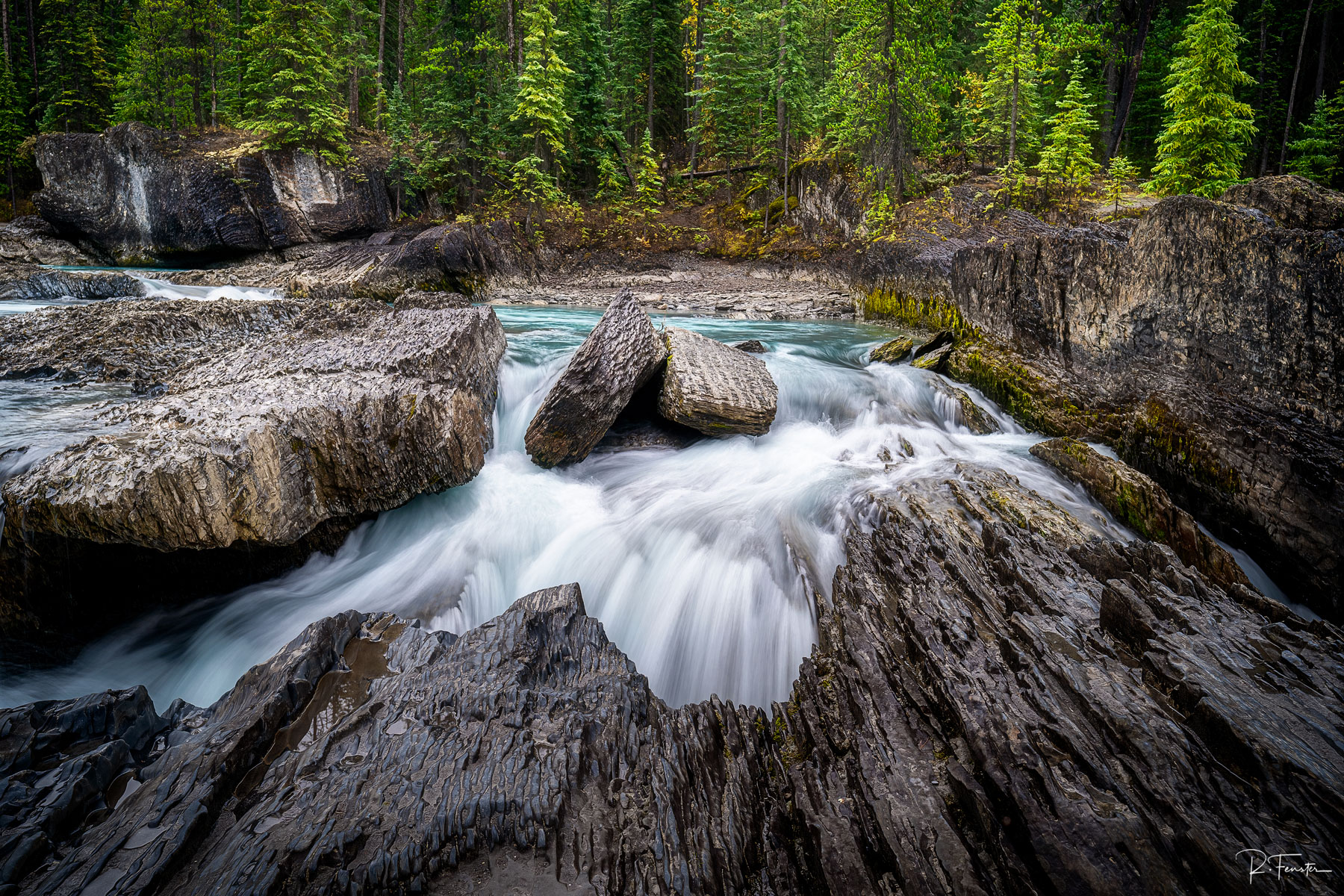
Two large rocks stand alone in the Kicking Horse River enduring the onslaught of pressure from the relentless current.
Fine Art Limited Edition of 100
The Yoho River carved a literal bridge out of solid limestone. It's one of those "nature is metal" moments that makes for dramatic shots.
Long exposure gold: This is where you want to break out the neutral density filters. Those rapids turn into silky smooth water with a longer exposure, and the contrast with the rugged rock formations is chef's kiss.
Multiple angles: You can shoot from above the bridge, below it, or even walk across it. Each spot gives you totally different compositions.
Spring timing: The water flow is most dramatic during spring melt, usually May through early July.
Yoho National Park's site has info on accessing the Natural Bridge and other spots in the area.
5. Emerald Lake: The Color-Changing Chameleon

A tranquil morning at Emerald Lake produced brought together water, rock and fog into a serene landscape.
Fine Art Limited Edition of 100
This lake literally changes colors depending on the light and season. Sometimes it's emerald green, sometimes it's more blue, sometimes it looks almost tropical. It's wild.
Summer perks: Canoe rentals let you get out on the water for reflections and different perspectives. The surrounding peaks reflect perfectly on calm days.
Winter magic: Snow transforms this into a completely different scene. Those minimalist winter shots here are absolutely stunning.
Misty mornings: Show up early when there's mist rising off the water. It creates this ethereal, almost mystical atmosphere that photographs beautifully.
6. Spirit Island: The Postcard Shot
Jasper National Park in Alberta, Canada, is home to iconic natural wonders that showcase this breathtaking beauty of fall. The Hall of the Gods, a series of towering limestone cliffs, provides a dramatic backdrop for the golden foliage, creating a scene reminiscent of ancient myths and legends.
Fine Art Limited Edition of 100
This tiny island on Maligne Lake is probably the most photographed spot in all of Jasper. And yeah, it's touristy – you have to take a boat cruise to get there – but sometimes the touristy spots are popular for good reason.
Boat cruise reality: You can't just paddle out there yourself. The Maligne Lake boat tours are seasonal (usually May to October), so plan accordingly.
Composition tips: Everyone shoots the classic wide shot, but try different focal lengths. Telephoto compression can make those background peaks look massive.
Timing: The boats run multiple times a day, and different times give you different light. Early morning and late afternoon cruises usually have the best light.
7. Three Sisters: The Canmore Icons
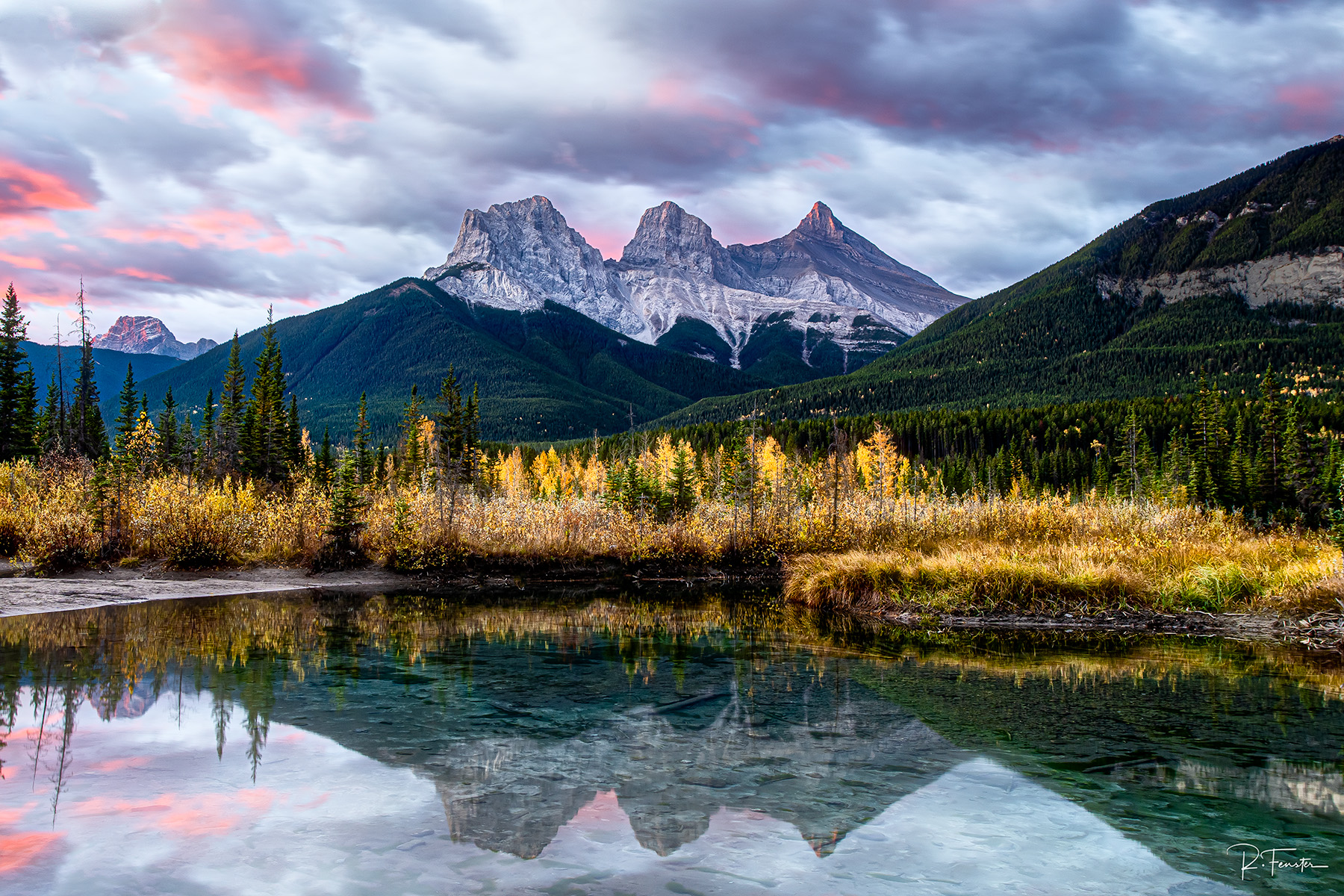
The Three Sisters Mountains near Canmore, Alberta, stand as iconic sentinels of the Canadian Rockies, comprising three majestic peaks named Big Sister, Middle Sister, and Little Sister.
Fine Art Limited Edition of 100
These three peaks near Canmore are like the poster children for the Canadian Rockies. Big Sister, Middle Sister, and Little Sister (yeah, those are their actual names) make for incredible sunrise and sunset shots.
Reflection spots: Policeman's Creek gives you great reflection opportunities, especially during calm conditions.
Seasonal variety: Spring wildflowers, summer green, fall colors, winter snow – these peaks look good year-round.
Multiple viewpoints: You can shoot them from town, from various hiking trails, or even from the Bow River pathway for different perspectives.
8. Sunwapta Falls: Raw Power in Action

The water wraps around the tiny island showcasing its power and beauty
Fine Art Limited Edition of 100
This two-tiered waterfall in Jasper is absolutely thunderous, especially during spring melt. The sound alone will give you goosebumps.
Long exposure heaven: The multiple tiers and complex water flow make this perfect for experimenting with different shutter speeds. Try everything from 1/4 second to 30 seconds and see what you like.
Canyon views: You can get down into the canyon for dramatic low-angle shots, or stay up top for the overview perspective.
Timing matters: Spring (May-June) is when the water flow is most dramatic, but it's beautiful year-round.
9. Bow Lake: The Accessible Beauty

Fine Art Limited Edition of 100
Right along the Icefields Parkway, so you can literally park and shoot. The glacier feeding the lake is visible from the shore, which is pretty cool – you can actually see where that turquoise color comes from.
Reflection central: This lake is often mirror-calm in the mornings, making it perfect for reflection shots.
Road trip friendly: Easy to hit this one as part of a larger Icefields Parkway drive. Great for those "quick stop that turns into an hour of shooting" moments.
Winter access: Unlike some high-altitude lakes, you can usually get here year-round, making it great for winter landscape photography.
10. Kananaskis Country: The Locals' Secret

Scattered trees line the colourful grasses of this Kananaskis forest
Fine Art Limited Edition of 100
This area just outside Banff and Jasper is where you go to escape the crowds. Upper Kananaskis Lake, the rolling foothills, wildlife everywhere – it's got everything without the tour buses.
Wildlife opportunities: Way better chances of spotting elk, deer, bears (from a safe distance!), and birds without crowds scaring them off.
Seasonal variety: Fall colors here are absolutely incredible. Those golden aspens against the mountain backdrop? Pure magic.
Less restrictions: Fewer permit requirements and access limitations compared to the main parks.
Actually Useful Photography Tips
Gear That Actually Matters
- Polarizing filter: Not optional in the Rockies. Cuts glare off water and makes those colors pop.
- Extra batteries: Cold kills batteries fast, especially at altitude. Bring double what you think you need.
- Microfiber cloth: You'll be dealing with mist, rain, and snow. Keep those lenses clean.
Timing Reality Check
Golden hour is great, but don't sleep on midday: Those intense blues in glacial lakes often look best under bright sun, even though every photography blog tells you to avoid noon shooting.
Weather changes fast: I've seen it go from sunny to snowing to sunny again in 30 minutes. Roll with it – dramatic weather often makes the best shots.
Crowd Management
Weekdays are your friend: If you can swing it, Monday through Thursday are way less crowded.
Shoulder seasons rock: May and September/October can be incredible with fewer people and often better light.
Early bird gets the shot: Most tourists don't do sunrise. Use this to your advantage.
The Real Talk About Visiting
Transportation Updates
Some of these spots now require shuttles or have limited parking. Check current access restrictions before you go. Nothing worse than driving two hours to find out you needed a reservation.
Weather Prep
Mountain weather is bipolar. I've seen people in flip-flops at Moraine Lake in July when it was 40°F and windy. Layer up, bring rain gear, and expect the unexpected.
Respect the Place
These spots are getting hammered with visitors. Stay on trails, pack out everything, and don't be the person trampling wildflowers for a selfie. Follow Leave No Trace principles so these places stay beautiful.
Planning Resources
Parks Canada has the most up-to-date info on road conditions, trail closures, and permit requirements. Their sites actually work well and have current info.
Bottom Line
The Canadian Rockies are basically a cheat code for landscape photography. Even if you've never held a camera before, you're going to get shots that make your friends think you're the next National Geographic photographer.
The key is just showing up. Yeah, some of these spots require planning now (thanks, Instagram), but once you're there with your camera, the mountains do most of the work for you. Just point, shoot, and try not to get too distracted by how ridiculously beautiful everything is.
Trust me, after your first sunrise at Moraine Lake or your first glimpse of that Peyto Lake blue, you'll understand why people become completely obsessed with this place. Fair warning – it's addictive.
